
Kombi Road Trip Packing List: What's Included and What to Bring
Your Kombi already comes with bedding, a gas stove, cookware for four, a cooler, a solar shower, USB and LED light, plus salt, sugar, coffee and tea. Bring light, soft luggage, sun and bug protection, a hammock, offline maps and clothes for hot days without A/C. There is no bathroom on board, so plan your stops.
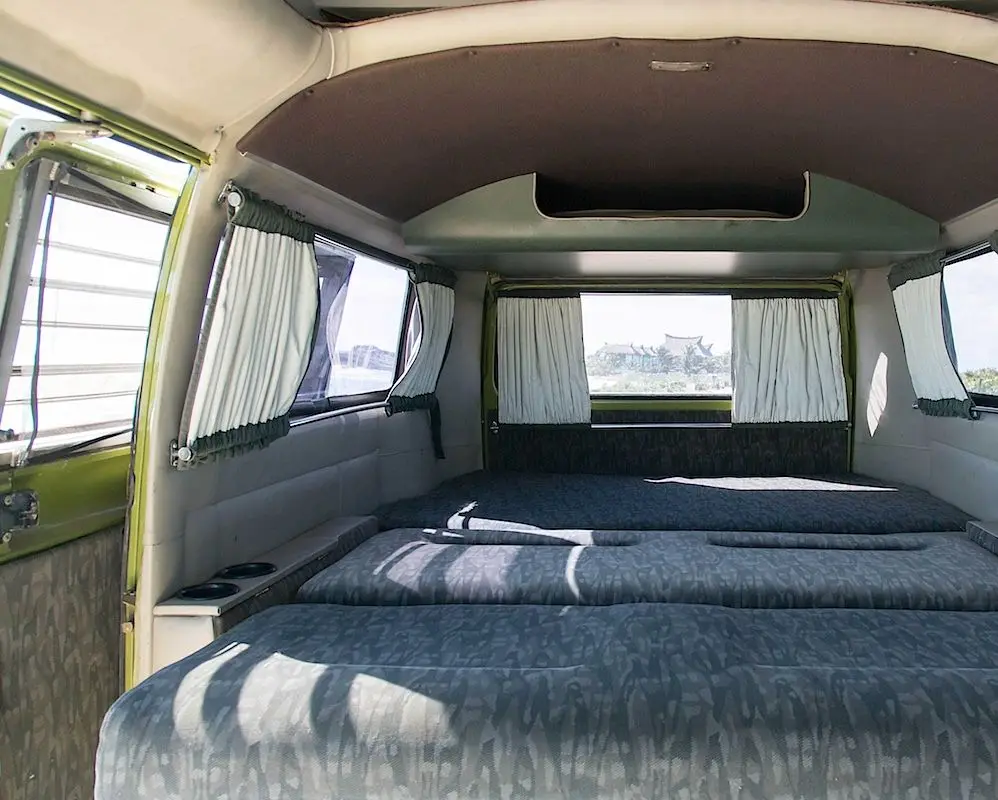
Packing for a Kombi trip is not like packing for a hotel. Space is limited, the van becomes your kitchen and bedroom, and everything you bring has to earn its place. The good news: a lot of what you need is already on board. Here’s what comes with the van, what to add yourself and what to leave at home.
What’s already in the Kombi
Every Kombi in our fleet (The Kiwi and The Orange) leaves Tulum with the same basic kit:
- Bed, sheets, pillows and blankets – the bed is made, you just climb in.
- Gas stove – enough for breakfast, coffee and simple dinners.
- Cookware and tableware for four – pots, plates, cups and cutlery.
- Cooler – for drinks, fruit and whatever you pick up at the market.
- Solar shower – leave it in the sun during the day and rinse off in the evening.
- USB charging and LED light – for phones and for reading once it gets dark.
- Salt, sugar, coffee and tea – so your first morning starts right.
The Orange has a fixed kitchen with a sink. You can compare the two vans on the Kombis page.
What the Kombis don’t have: air conditioning or a bathroom. And they are manual. That’s part of the charm, but it shapes what you pack.
Clothes: light, quick-dry and few
The Riviera Maya is hot and humid most of the year, and without A/C you’ll feel it during the middle of the day.
- Light, breathable clothes (cotton or linen) and one long-sleeve layer for sun and mosquitoes.
- Two swimsuits, so one can dry while you wear the other.
- A light sweater or jacket: nights by the sea or in the jungle can feel cooler than you expect, especially in the winter months.
- Sandals plus a pair of closed shoes or water shoes for cenotes and ruins.
- A hat and sunglasses.
Luggage tip: use soft bags or backpacks, not hard suitcases. They fit into corners and don’t fight with the bed at night.
Health, sun and bugs
- Biodegradable sunscreen. Many cenotes and reefs ask visitors to use it or to rinse off before swimming. Rules vary by site, so check when you arrive.
- Insect repellent, ideally one that’s gentle on water if you’ll be swimming in cenotes.
- A small first-aid kit: plasters, painkillers, rehydration salts, anything you take regularly.
- A refillable water bottle. Buy large jugs of drinking water and keep the bottles topped up.
Camp comfort: the small things that make a difference
- A hammock. It’s the best upgrade for a Kombi trip. Hang it between two palms at the campsite and you have a living room. Check that the place allows it before tying it to anything.
- Quick-dry towels, one per person (towels are not on the included list).
- A headlamp, so you’re not hunting for things in the dark.
- Reusable bags for shopping and for keeping wet clothes separate.
- A power bank, since the USB ports work best while you’re driving.
- Wet wipes and a small bag for rubbish. With no bathroom on board, campsites with toilets are your friend; that’s one reason travellers recommend them. See our guide on where to sleep in a campervan in the Riviera Maya.
Navigation and documents
- Offline maps downloaded before you leave Tulum. Mobile signal can be patchy in the jungle and around some cenotes.
- Martin’s route book: he hands it over at pick-up, with cenotes, beaches and places to sleep. Travellers mention it in their reviews: “He also gives you a self-made guide in which he shares a lot of tips and beautiful places in the area.” (Mark A.)
- Driving licence (valid) and the credit card you booked with. Drivers must be 23 or older.
- Some cash in pesos for small shops, fruit stands and entrances that may not take cards.
For more on the road itself, read our guide to driving in the Riviera Maya.
What to leave at home
- Hard suitcases and anything bulky.
- Hair dryers and other high-power devices: the van has USB, not a household socket.
- Too many outfits. You’ll live in a swimsuit and a T-shirt.
- A packed schedule. With a top speed of around 70 km/h, the Kombi rewards slow travel.
A quick shopping list for day one
Pick-up is in Tulum Centro, five blocks from the ADO bus terminal, so you can stock up before you hit the road: drinking water, ice for the cooler, fruit, bread, eggs, tortillas and something for your first dinner. Fill up with Magna petrol whenever it’s convenient; the van is returned with a full tank.
Ready to pack?
Keep it light, bring a hammock and leave room for the unexpected. Check dates on the booking page, and if you’re unsure about anything on this list, just write to Martin before you travel.
Frequently asked questions
Do I need to bring sheets or a sleeping bag?
No. Each Kombi comes with a bed, sheets, pillows and blankets. You only need your own towels and personal items.
Is there a toilet or air conditioning in the Kombi?
No. The Kombis are original Westfalias with no A/C and no bathroom. Travellers usually sleep at campsites, which have toilets and electricity, and plan their day around the cooler hours.
What kind of luggage works best in a Kombi?
Soft bags or backpacks that you can squash into corners. Hard suitcases take up a lot of space in a classic van and are awkward to store once the bed is made.